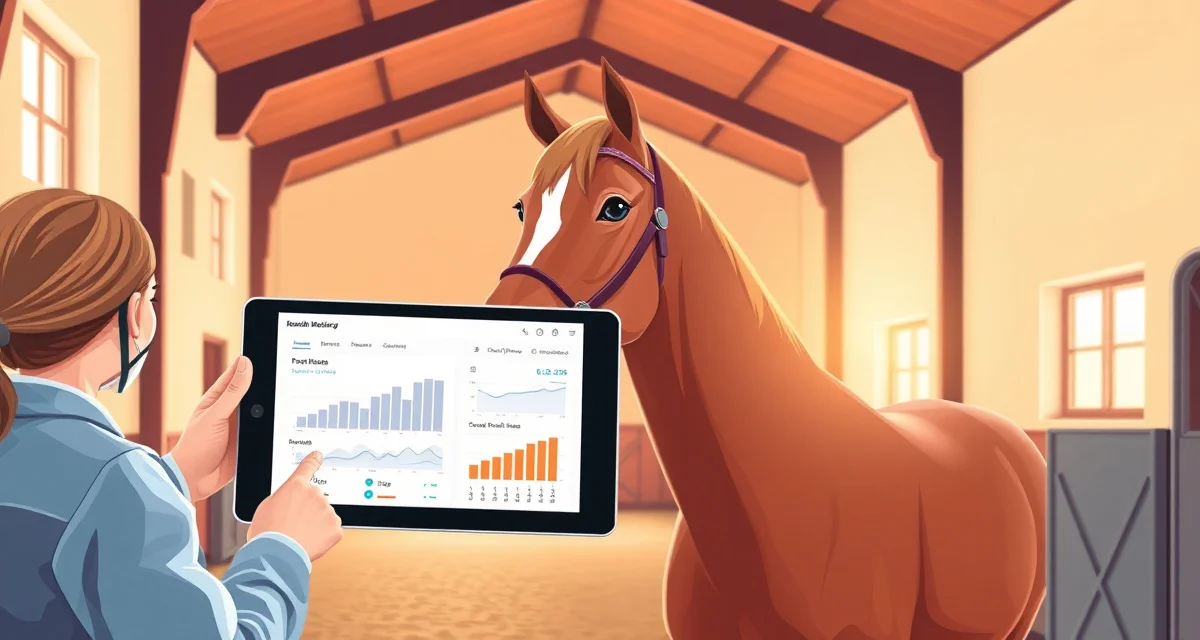
Horse Health Monitoring at Lesson Barns: AI Detection Guide
Lesson barns operate nothing like private boarding facilities. You have high horse turnover throughout the day, multiple riders on the same animal, and a client base that ranges from six-year-olds on their first pony to adult amateurs logging serious hours. That combination creates a health monitoring problem that generic equine software was never designed to solve.
TL;DR
- Effective barn management requires systems that match actual daily workflows, not adapted generic tools
- Per-horse record keeping with digital access reduces the response time to owner questions from hours to seconds
- Automated owner communication and health alerts reduce inbound calls while increasing owner satisfaction and retention
- Billing errors cost barns thousands of dollars annually; point-of-service charge logging is the most effective prevention
- Staff accountability systems with named task assignments and completion logs prevent care gaps without micromanagement
- Purpose-built equine software connects health records, billing, and owner communication in one place
Lesson facilities represent a distinct segment with unique management needs, and horse health monitoring at a lesson barn has to account for variables that simply do not exist at a standard boarding operation. This guide walks through how AI-based monitoring works in that specific context, from baseline learning through alert delivery.
Why Lesson Barns Need a Different Approach
A horse in a lesson program can carry four to six riders in a single day. Each rider applies different pressure, different balance, and different leg aids. By the time a subtle lameness or early respiratory issue becomes visible to the naked eye, that horse has already worked through several sessions.
Traditional health checks, a morning walk-through and an evening feed observation, miss the window where early intervention is cheapest and most effective. AI monitoring closes that window by tracking behavioral and physiological signals continuously, not just twice a day.
Step 1: Establish Individual Baselines for Each Horse
Why Baselines Matter More in High-Traffic Environments
AI health monitoring starts with learning what "normal" looks like for each animal. In a lesson barn, normal is more complex. A school horse's resting heart rate, movement patterns, and feeding behavior after a light beginner lesson will differ from the same horse's patterns after a two-hour advanced session.
BarnBeacon's baseline engine accounts for workload variation by tagging each monitoring window with session data pulled from the lesson schedule. This means the system is not comparing a post-lesson recovery period against a rest-day baseline, which would generate false positives constantly.
What to Do
- Connect your lesson scheduling data to the monitoring platform during setup
- Allow a minimum of 14 days for the system to build a statistically valid baseline per horse
- Flag any horses coming off injury or illness so the system starts a fresh baseline rather than inheriting skewed historical data
Step 2: Configure Alert Triggers for Lesson-Specific Risk Factors
The Risks That Are Unique to School Horses
School horses face repetitive stress injuries at higher rates than privately owned horses. They are also more likely to develop ulcers, given the combination of irregular feeding windows and consistent low-grade stress from constant handling. Your alert thresholds should reflect those elevated risks.
Standard monitoring platforms often ship with thresholds calibrated for performance horses or breeding stock. Those defaults will either miss early warning signs in school horses or flood your staff with noise. Neither outcome is acceptable when you have 20 students arriving at 9 a.m.
What to Do
- Set ulcer-risk alerts to trigger on feeding behavior changes of 15% or more from baseline, not the 25% default common in generic platforms
- Enable post-session monitoring windows that extend 90 minutes after each lesson ends, not just during active work
- Configure lameness-pattern alerts to cross-reference which riders worked the horse that day, so your vet has context when you call
For a broader look at how these features fit into daily operations, the lesson barn operations guide covers scheduling, staffing, and health protocol integration in detail.
Step 3: Integrate with Veterinary Records
Closing the Loop Between Detection and Treatment
An alert is only useful if the person receiving it has context. When your monitoring system flags an elevated respiratory rate in a 12-year-old school pony, your vet needs to know that horse had a respiratory infection eight months ago, not just that something looks off today.
BarnBeacon integrates directly with common equine veterinary record systems, pulling vaccination history, past diagnoses, and current medications into the alert notification. Your vet gets a complete picture in the same message that wakes them up at 6 a.m.
What to Do
- Upload or sync each horse's full veterinary history during onboarding, not just current medications
- Set your vet as a secondary alert recipient for any flag rated medium severity or above
- After each vet visit, log the outcome in the platform so the AI can refine its detection accuracy over time
Step 4: Set Up Owner Notification Protocols
Lesson Barns Have a More Complex Ownership Structure
This is where lesson barn operations diverge sharply from boarding. Some of your horses are barn-owned. Some are leased. Some are privately owned but enrolled in the lesson program. Each category requires a different notification chain.
A barn-owned horse flags your barn manager. A leased horse may need to notify both the leaseholder and the original owner. A privately owned lesson horse needs to reach the owner first, with the barn manager copied. Getting this wrong creates liability exposure and damages client relationships.
What to Do
- Map each horse's ownership and lease structure in the platform before going live
- Create notification templates for each ownership category so messages are consistent and professional
- Set escalation timers: if an owner does not acknowledge a health alert within two hours, the system should automatically notify the barn manager to follow up by phone
Step 5: Train Your Lesson Staff on Alert Response
The Technology Only Works If the People Do
AI monitoring catches the signal. Your staff has to act on it. In a lesson barn, that means instructors, barn staff, and front-desk personnel all need to know what to do when an alert comes through mid-lesson.
The most common failure point is not the technology, it is the gap between an alert arriving on a manager's phone and that information reaching the instructor who is currently on the horse in question. Build a protocol that bridges that gap in under five minutes.
What to Do
- Run a quarterly drill where a test alert is sent and staff are timed on response
- Post a laminated one-page response protocol in the tack room and the office
- Designate one staff member per shift as the alert point-of-contact so responsibility does not diffuse across the whole team
For facilities looking to connect health monitoring with broader barn management software, integration with scheduling, billing, and client communication tools eliminates the manual handoffs that slow down response time.
Common Mistakes to Avoid
Skipping the baseline period. Going live with alerts before the system has enough data produces false positives that train your staff to ignore notifications. Two weeks of baseline collection is not optional.
Using one notification setting for all horses. A barn-owned beginner horse and a privately owned lease horse require different alert chains. Treating them the same creates gaps in communication and potential liability.
Failing to log vet visit outcomes. Every unlogged visit is a missed opportunity for the AI to improve. The system gets more accurate over time only if you feed it complete data.
Ignoring post-session monitoring windows. Most early lameness and colic signs appear in the 60 to 90 minutes after work, not during it. If your monitoring stops when the lesson ends, you are watching the wrong window.
What are the unique management needs of a lesson barn?
Lesson barns manage horses that carry multiple riders daily, which increases wear, stress, and injury risk compared to single-rider ownership situations. They also operate with complex ownership structures, including barn-owned, leased, and privately owned horses in the same program, each requiring different communication and billing protocols. Health monitoring, scheduling, and client notification all need to account for that layered structure.
How do I run a lesson facility efficiently?
Efficient lesson facility management depends on tight integration between scheduling, horse health tracking, and client communication. When those systems share data, staff spend less time on manual handoffs and more time on instruction and horse care. Standardized protocols for health alerts, lesson cancellations, and billing disputes also reduce the decision fatigue that slows down daily operations.
What software do lesson barn managers use?
Lesson barn managers typically use a combination of scheduling tools, equine health monitoring platforms, and billing software, though many are moving toward integrated platforms that handle all three. The key capability to look for is lesson-specific workflow support, including per-horse workload tracking, multi-rider session logging, and ownership-aware notification routing, features that general barn management tools often lack.
How does BarnBeacon compare to spreadsheets for barn management?
Spreadsheets require manual updates, lack real-time notifications, and create version control problems when multiple staff members are working from different files. BarnBeacon centralizes records, pushes alerts automatically based on logged events, and connects care records to billing and owner communication in one system. Most facilities report saving several hours per week after switching from spreadsheets.
What is the setup process like for BarnBeacon?
Most facilities complete the initial setup in under a week. Horse profiles, service templates, and billing configurations can be imported from existing records or entered directly. BarnBeacon's US-based support team is available to assist with setup, and most managers are running their first billing cycle through the platform within days of starting.
Can BarnBeacon support a barn with multiple staff members?
Yes. BarnBeacon supports multiple user accounts with role-based access, so barn managers, barn staff, and owners each see the information relevant to their role. Task assignments, completion logs, and communication history are all attached to the barn's account rather than to individual staff phones or email addresses.
Sources
- American Association of Equine Practitioners (AAEP)
- United States Equestrian Federation (USEF)
- American Horse Council
- Kentucky Equine Research
- UC Davis Center for Equine Health
Get Started with BarnBeacon
Running a lesson barn well requires the right tools behind the right protocols. BarnBeacon gives managers the health record tracking, billing automation, and owner communication infrastructure to operate efficiently without adding administrative staff. Start a free trial and see how the platform fits the way your barn already works.