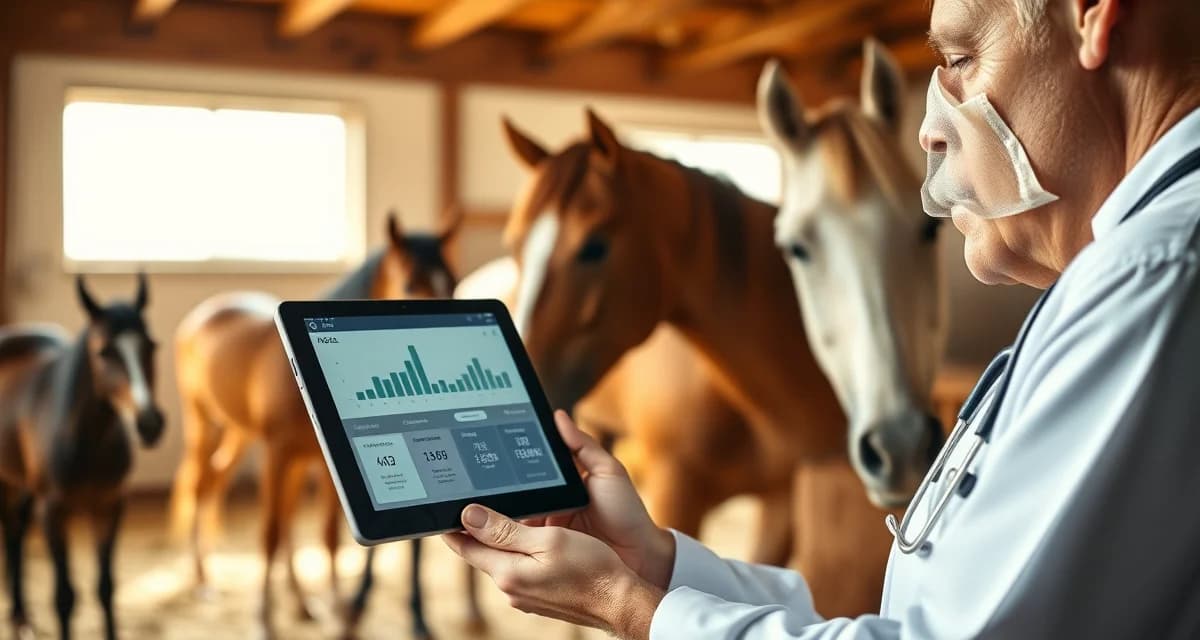
Horse Health Monitoring by Age: Foal Through Senior
A foal needs checking every two hours in the first 48 hours of life. A healthy 8-year-old in light work can go through a normal week without any flags at all. A 24-year-old on pergolide needs daily medication, monthly weight assessment, and quarterly bloodwork.
TL;DR
- Effective barn management requires systems that match actual daily workflows, not adapted generic tools
- Per-horse record keeping with digital access reduces the response time to owner questions from hours to seconds
- Automated owner updates and health alerts reduce inbound calls while increasing owner satisfaction and retention
- Billing errors cost barns thousands of dollars annually; point-of-service charge logging is the most effective prevention
- Staff accountability systems with named task assignments and completion logs prevent care gaps without micromanagement
- Purpose-built equine software connects health records, billing, and owner communication in one place
Same species. Completely different monitoring requirements.
The mistake most barn managers make is applying the same daily health observation checklist to every horse in the barn regardless of age. That misses the age-specific warning signs and creates either over-monitoring (wasting time on low-risk horses) or under-monitoring (missing early signs in high-risk ones).
Here's what health monitoring actually looks like at each life stage.
Foals: Birth to 6 Months
No horse in your care requires more intensive monitoring than a newborn foal. In the first 48 hours, you're watching for problems that can kill a foal within hours of onset.
First 24 hours checklist:
- Standing within 2 hours of birth
- Nursing within 3 hours of birth
- First manure (meconium) passed within 3–4 hours, failure to pass is a medical emergency
- Receiving colostrum, IgG test at 18–24 hours confirms passive transfer
- Umbilical cord dry and not draining
- No signs of septicemia (depression, fever, failure to nurse, joint swelling)
From 24 hours to 2 weeks:
- Nursing regularly (average foal nurses 4–7 times per hour)
- Normal manure and urination
- No joint swelling or heat (joint ill is a serious infection risk in foals)
- Vital signs within normal foal range (temp 99.5–102.2°F, heart rate 70–100 bpm at rest, respiration 20–40 bpm)
- Weight gain tracking if possible, foals should gain 1.5–3 lbs per day in the first weeks
From 2 weeks to 6 months:
- Monthly health observations with weight estimate
- Vaccination schedule begins at 4–6 months
- deworming schedule starts per veterinarian guidance
- Hoof trimming begins at 4–6 weeks, regular farrier visits essential for correct limb development
BarnBeacon setup for foals:
Create a dedicated foal health protocol with 2-hour observation windows in the first 48 hours. BarnBeacon's alert system prompts the night check staff at scheduled intervals during the critical early period.
Weanlings and Yearlings: 6 Months to 24 Months
After weaning (typically 4–6 months), foals enter a period of rapid growth that makes them vulnerable to developmental orthopedic diseases, growth plate problems, osteochondrosis, and physitis.
What to monitor:
- Limb conformation and symmetry, changes can indicate growth problems
- Joint swelling, especially in knees, fetlocks, and hocks
- Weight and body condition, both over-conditioning and under-conditioning cause problems at this age
- Attitude and behavior, depression or reluctance to move can signal musculoskeletal pain
- Hoof quality, rapid growth and diet changes affect hoof integrity
Feeding monitoring:
Weanlings and yearlings on high-grain diets for growth are at risk for nutritional DOD. If you're boarding young horses from breeders with specific nutrition programs, their feeding protocol needs to be documented and followed exactly. BarnBeacon's per-horse feeding protocols ensure a specific weanling's grain ration isn't accidentally given at the wrong amount by a substitute feeder.
Health monitoring frequency:
Daily observation is standard. Monthly assessment of body condition, weight estimate, and limb conformation for breeders tracking development. Quarterly veterinary assessment for horses being prepared for sales.
Young Horses in Training: 2–6 Years
Horses entering training face their own set of monitoring challenges. They're often in the highest-risk period for respiratory disease (mixing with new horses), stress-related issues, and early musculoskeletal injury from increased workload.
Training-related monitoring:
- Respiratory rate and recovery time post-work
- Limb swelling, heat, or tenderness post-training
- Attitude changes, a normally willing horse becoming reluctant to work is a symptom
- Weight maintenance during increased caloric demand
- Recovery quality, horses that take longer than usual to recover from a similar workload may be developing a health issue
The stress observation:
Young horses in new training environments often show stress through changes in eating, stereotypies (weaving, stall walking), or behavioral changes. Document these in BarnBeacon as health observations, a pattern of stress behaviors is information for both the trainer and the vet.
Common health issues in this age group:
- Strangles (highly contagious, biosecurity protocols essential)
- Respiratory viruses from exposure at shows or sales
- Early joint issues from training loads
- Gastric ulcers, very common in horses in active training
BarnBeacon protocol: Training horses should have both a daily health observation record and a training log. When a horse goes off their feed on a day when training intensity was high, you want to see both pieces of information together.
Prime Working Age: 7–15 Years
Healthy horses in this age range are typically the lowest-maintenance to monitor. They've passed the developmental vulnerability of youth and haven't yet entered the higher-risk senior years.
Standard daily observation still matters:
- Appetite and water consumption
- Manure, amount and consistency
- Attitude and energy level
- Any physical changes, new lumps, swelling, coat changes
Age-specific concerns:
- Dental changes, floating becomes more important as horses move through this age range. Changes in quidding (dropping partially chewed food), weight loss, or behavior change during eating signal dental issues.
- Athletic injuries, the performance horse's monitoring checklist expands to include digital pulse checks, leg palpation post-work, and careful tracking of any lameness history.
- Vaccination and parasite management, annual wellness exams, bi-annual or seasonal vaccination protocols, and strategic deworming based on fecal egg counts.
Show horses in this age group:
Show horses require medication tracking documentation, negative test windows for prohibited substances, and careful tracking of any veterinary treatments that might affect competition eligibility. BarnBeacon's medication module with show compliance notes is specifically designed for this.
Early Senior: 16–20 Years
Horses in this age range often look and work like horses a decade younger, but they need more frequent monitoring because conditions that develop silently in their 20s often begin showing early signs in their mid-teens.
Emerging conditions to watch:
- PPID / Cushing's Disease, earliest signs are subtle: slightly longer coat that's slower to shed, subtle topline muscle loss, increased water intake. Most horses aren't diagnosed until signs are obvious, but early diagnosis leads to better outcomes.
- Dental changes, teeth continue to change. Some horses begin losing significant dental function in their late teens.
- Metabolic syndrome (EMS), cresty neck, easy keeper getting fatter on the same diet, elevated ACTH
- Arthritis, subtle stiffness after standing, reluctance to work on hard ground, gradual change in movement quality
Monitoring frequency adjustment:
At 16–20 years, semi-annual veterinary wellness exams become more important. Annual PPID screening (blood ACTH test) is recommended by most equine practitioners. BarnBeacon health records support this by providing the vet with a full observation history at the time of the exam.
Body condition scoring:
BCS should be logged monthly for horses in this age range. A horse that was BCS 5 at the start of winter and is BCS 4 in March has been losing weight slowly, it's easy to miss gradually unless you're measuring.
Advanced Senior: 20+ Years
Horses over 20 are genuinely high-maintenance from a monitoring standpoint. The horses I've managed in their mid-to-late twenties, the school horses that have been with us for 15 years, the retired show horse that belongs to an adult boarder, require as much attention as foals in terms of observation frequency.
Daily monitoring essentials for 20+ year horses:
- Feed consumption, changes in appetite are often the first sign of a health change
- Body weight, visual BCS plus physical assessment of ribs, spine, hips
- Manure, changes in volume or consistency
- Water intake, both increased (PPID, EMS) and decreased (pain, illness) are meaningful
- Coat and skin condition
- Hoof condition, senior horses often have changing hoof quality
Common conditions in 20+ horses:
- Active PPID, daily pergolide, monitoring for secondary infections (skin, respiratory, hooves), management of hyperhidrosis or anhidrosis
- Severe dental disease, many 25+ year old horses need soaked hay pellets or complete feeds rather than long-stem hay
- Arthritis, daily NSAID management, exercise modification
- Muscle loss, protein-enhanced feeds, targeted exercise, possible supplementation
The senior feeding protocol:
A 26-year-old horse on pergolide, soaked senior feed, joint supplement, vitamin E, and a probiotic has one of the most complex daily feeding protocols in your barn. BarnBeacon's recipe-based feeding system ensures the person filling in on a Saturday gets the exact same meal prepared the same way as every other day of the week.
BarnBeacon setup for senior horses:
- Daily observation checklist with weight and BCS fields
- Monthly BCS log with trend line
- Medication management for all daily drugs
- Feeding recipe with preparation notes ("soak for 20 minutes," "add warm water in winter")
- Vet exam reminders at 6-month intervals
- Alert if appetite drops more than two consecutive feedings
Quick Reference: Monitoring Intensity by Age
| Life Stage | Age | Monitoring Frequency | Key Concerns |
|------------|-----|---------------------|--------------|
| Foal | 0–6 mo | Every 2 hrs (first 48 hrs), then 3x daily | Septicemia, failure to nurse, DOD |
| Weanling/Yearling | 6–24 mo | Daily observation, monthly BCS | DOD, limb development, nutrition |
| Young in training | 2–6 yrs | Daily obs + post-work check | Respiratory, stress, early injury |
| Prime working | 7–15 yrs | Daily observation | Dental, lameness, show compliance |
| Early senior | 16–20 yrs | Daily obs + monthly BCS | PPID onset, EMS, arthritis signs |
| Advanced senior | 20+ yrs | Daily obs + bi-weekly BCS | Active disease management, weight |
How does BarnBeacon compare to spreadsheets for barn management?
Spreadsheets require manual updates, lack real-time notifications, and create version control problems when multiple staff members are working from different files. BarnBeacon centralizes records, pushes alerts automatically based on logged events, and connects care records to billing and owner communication in one system. Most facilities report saving several hours per week after switching from spreadsheets.
What is the setup process like for BarnBeacon?
Most facilities complete the initial setup in under a week. Horse profiles, service templates, and billing configurations can be imported from existing records or entered directly. BarnBeacon's US-based support team is available to assist with setup, and most managers are running their first billing cycle through the platform within days of starting.
Can BarnBeacon support a barn with multiple staff members?
Yes. BarnBeacon supports multiple user accounts with role-based access, so barn managers, barn staff, and owners each see the information relevant to their role. Task assignments, completion logs, and communication history are all attached to the barn's account rather than to individual staff phones or email addresses.
Sources
- American Association of Equine Practitioners (AAEP)
- American Horse Council
- Kentucky Equine Research
- UC Davis Center for Equine Health
- Penn State Extension Equine Program
Get Started with BarnBeacon
Running a equine facility well requires the right tools behind the right protocols. BarnBeacon gives managers the health record tracking, billing automation, and owner communication infrastructure to operate efficiently without adding administrative staff. Start a free trial and see how the platform fits the way your barn already works.