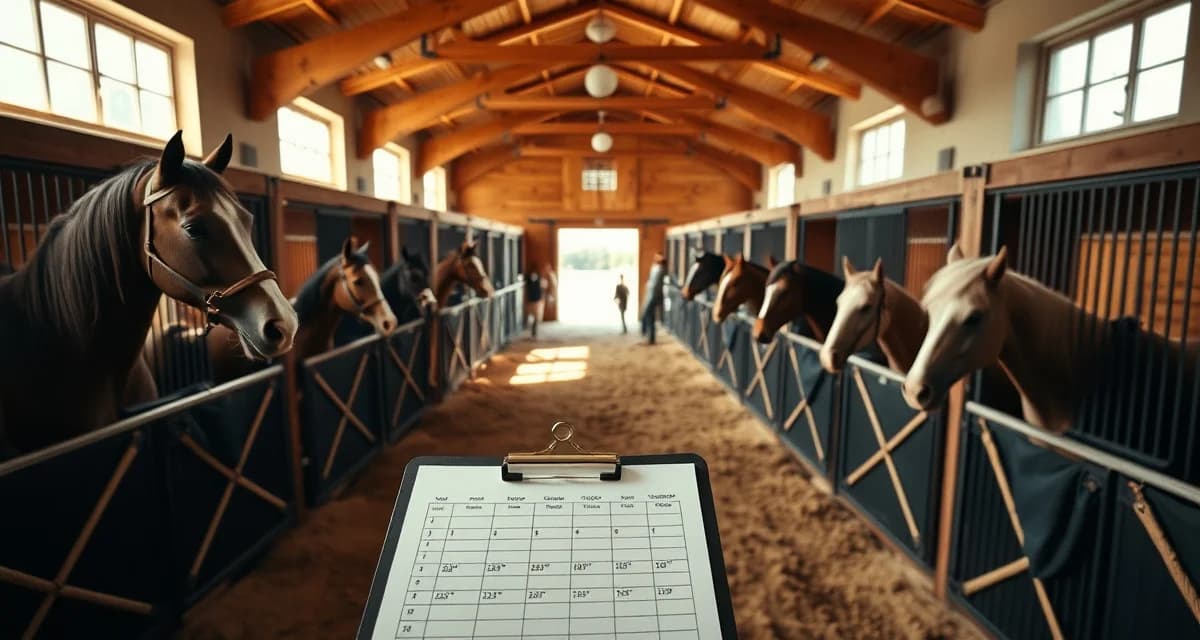
Lesson Barn Operations Guide: Scheduling to Billing
Running a lesson barn means managing a dozen moving parts before 8 a.m. Horses need to be matched to riders, schedules need to be built and communicated, invoices need to go out, and parents need answers, all while the actual horses still need feeding, turnout, and care.
TL;DR
- Effective barn management requires systems that match actual daily workflows, not adapted generic tools
- Per-horse record keeping with digital access reduces the response time to owner questions from hours to seconds
- Automated owner communication and health alerts reduce inbound calls while increasing owner satisfaction and retention
- Billing errors cost barns thousands of dollars annually; point-of-service charge logging is the most effective prevention
- Staff accountability systems with named task assignments and completion logs prevent care gaps without micromanagement
- Purpose-built equine software connects health records, billing, and owner communication in one place
Barn managers spend an average of 4.2 hours per day on administrative tasks that software can automate. That is more than half a standard workday consumed by scheduling conflicts, chasing payments, and answering the same questions by text. This lesson barn operations guide covers every operational layer of a lesson facility, from first booking to final invoice, and shows where modern tools close the gap.
The Real Cost of Running a Lesson Barn Manually
Most barn managers are not running one system. They are running six or more: a paper calendar, a spreadsheets for horse rotation, a group chat for parent communication, a separate invoicing tool, a waiver folder, and a notes app for student progress. Each tool works in isolation. None of them talk to each other.
The result is predictable. Double-bookings happen. A horse gets scheduled for three back-to-back lessons when the rotation says two. A parent swears they paid last month. A new student shows up without a signed liability waiver on file.
These are not management failures. They are system failures. The fix is not working harder, it is consolidating operations into a single platform built for riding lesson facility operations.
How does BarnBeacon compare to spreadsheets for barn management?
Spreadsheets require manual updates, lack real-time notifications, and create version control problems when multiple staff members are working from different files. BarnBeacon centralizes records, pushes alerts automatically based on logged events, and connects care records to billing and owner communication in one system. Most facilities report saving several hours per week after switching from spreadsheets.
What is the setup process like for BarnBeacon?
Most facilities complete the initial setup in under a week. Horse profiles, service templates, and billing configurations can be imported from existing records or entered directly. BarnBeacon's US-based support team is available to assist with setup, and most managers are running their first billing cycle through the platform within days of starting.
Can BarnBeacon support a barn with multiple staff members?
Yes. BarnBeacon supports multiple user accounts with role-based access, so barn managers, barn staff, and owners each see the information relevant to their role. Task assignments, completion logs, and communication history are all attached to the barn's account rather than to individual staff phones or email addresses.
Sources
- American Association of Equine Practitioners (AAEP)
- American Competitive Trail Horse Association (ACTHA)
- American Horse Council
- Kentucky Equine Research
- UC Davis Center for Equine Health
Get Started with BarnBeacon
Running a lesson barn well requires the right tools behind the right protocols. BarnBeacon gives managers the health record tracking, billing automation, and owner communication infrastructure to operate efficiently without adding administrative staff. Start a free trial and see how the platform fits the way your barn already works.