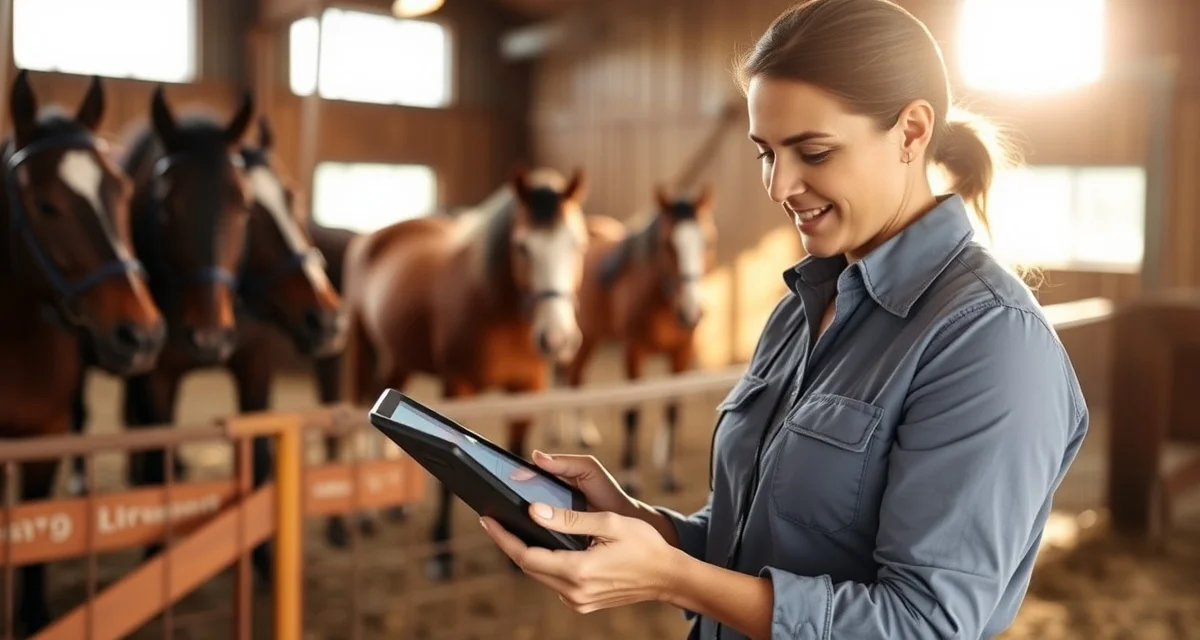
Trail Riding Barn Health Monitoring: FAQ for Managers
Trail-riding barn health monitoring presents a set of challenges that generic equine software simply wasn't built to handle. With horses rotating through varied terrain, exposure to unfamiliar animals on shared trails, and high daily turnover of riders and mounts, the health risks at a trail riding facility are fundamentally different from those at a boarding or competition barn.
TL;DR
- Trail riding facilities manage a unique combination of guided ride scheduling, horse-rider matching, and terrain-specific health monitoring.
- Pre-ride and post-ride health checks for horses in trail programs should be documented individually, not assessed as a group.
- Rider ability assessments at intake are both a safety requirement and a liability protection measure for trail operations.
- Route and conditions logging after each ride creates a record that supports horse welfare audits and injury investigations.
- Health Monitoring management at trail facilities requires tools that reflect the episodic, variable nature of trail ride operations.
Why Trail Riding Facilities Need a Different Approach
Trail riding operations move horses in and out of contact with outside animals, unpredictable environmental conditions, and physical stress that changes day to day. A horse that completed a 3-hour mountain ride on Saturday needs different post-activity monitoring than one that did a flat 45-minute beginner loop.
Generic barn management software tracks stall assignments and feeding schedules. It doesn't account for trail-specific variables like exposure risk from shared water sources, hoof condition changes from rocky terrain, or respiratory stress from dust and pollen on dry trails. That gap in functionality is where health incidents get missed.
BarnBeacon was built with trail riding facility health monitoring as a core use case, not an afterthought. Purpose-built tools mean managers can log trail-specific health observations, flag horses that need post-ride assessment, and track patterns across routes and seasons.
How Trail Riding Barn Managers Handle Health Monitoring
Effective health monitoring at a trail riding barn requires a structured daily protocol that accounts for both pre-ride and post-ride status. Most experienced managers use a three-point check: pre-ride soundness assessment, mid-day condition check for horses on extended rides, and a post-ride recovery review before horses return to their stalls or pastures.
The challenge is volume. A busy trail riding operation might move 20 to 40 horses per day across multiple ride groups. Manual paper logs don't scale, and staff turnover means institutional knowledge walks out the door regularly.
Digital health logs tied to individual horse profiles solve the continuity problem. When every observation is timestamped and attached to a horse's record, a new staff member can pull up a horse's recent history in seconds rather than hunting through a binder. Barn management software that supports mobile entry lets wranglers log observations at the trailhead, not just back at the barn.
BarnBeacon's health monitoring module includes trail-specific observation categories, so staff aren't forcing trail riding data into fields designed for stall-kept horses.
What Software Do Trail Riding Barns Use for Health Monitoring?
Most trail riding barns start with either spreadsheets or general-purpose barn management platforms. Both fall short in the same ways: no trail-specific data fields, no route-linked health tracking, and no alert logic built around the post-ride recovery window.
Some facilities use veterinary practice management software, but those tools are designed for clinics, not daily operational monitoring by non-veterinary staff.
BarnBeacon fills the gap with features built specifically for trail riding barn operations, including:
- Post-ride health flags that prompt staff to complete a recovery check within a configurable time window after a ride ends
- Route-linked observation logs so managers can identify whether health issues correlate with specific trails or terrain types
- Herd exposure tracking to log when horses have contact with outside animals on shared trail systems
- Automated alerts when a horse's logged vitals fall outside baseline ranges established during onboarding
No other platform currently offers FAQ-level documentation or purpose-built tooling specifically for trail riding equine facility health monitoring. That means managers at trail operations are either adapting tools that don't fit or building workarounds from scratch.
Get Started with BarnBeacon
Trail riding operations depend on accurate horse-rider matching, pre- and post-ride health documentation, and scheduling tools that reflect the variable, weather-dependent nature of guided ride programs. BarnBeacon's horse profiles, health logging, and scheduling features give trail facility managers the documentation foundation that liability protection and program quality both require. If your trail operation is still managing these workflows through informal systems, BarnBeacon offers a more reliable structure.
How do trail riding barn managers handle health monitoring?
Trail riding barn managers handle health monitoring through structured pre-ride and post-ride assessment protocols tied to individual horse records. The most effective operations use digital logging tools that allow staff to record observations at the point of care, whether that's the trailhead or the barn aisle. Consistency across staff shifts is the biggest operational challenge, and software with mobile entry and mandatory check prompts helps close that gap.
What software do trail riding barns use for health monitoring?
Most trail riding barns use general barn management platforms or spreadsheets, neither of which includes trail-specific health monitoring features. BarnBeacon is purpose-built for this use case, with post-ride health flags, route-linked observation logs, and herd exposure tracking that generic tools don't offer. Facilities that have switched from spreadsheet-based systems report faster incident identification and better continuity across staff shifts.
What are the health monitoring challenges at trail riding facilities?
The primary challenges are uncontrolled exposure risk on shared trail systems, variable physical stress by route and rider weight, lean staffing ratios that limit observation time, and seasonal environmental factors that require longitudinal data to interpret. Generic barn software doesn't capture route or terrain data, which means managers lose the context needed to identify patterns. Purpose-built trail riding health monitoring tools address these gaps directly.
How do trail riding facilities assess horse-rider compatibility before a guided ride?
A standardized rider ability assessment at intake -- covering riding experience, comfort level with various horse temperaments, and any physical limitations -- should be matched against each horse's documented temperament and ride history before a pairing is confirmed. Never rely on rider self-reporting alone; riders consistently overestimate their experience level. Build a brief observation component into the intake process to verify stated ability before a guided trail pairing is made.
What records should a trail riding facility keep for each horse in the program?
Trail program horses should have records covering the date and conditions of each ride (trail, duration, rider weight), post-ride health observations, any behavioral incidents, and all veterinary and farrier care. Horses accumulating high weekly mileage need closer monitoring for soundness changes than the standard weekly observation would catch. A ride log tied to each horse's health record makes it possible to correlate soundness changes with recent workload and trail conditions.
Sources
- American Association of Equine Practitioners (AAEP)
- American College of Veterinary Internal Medicine (ACVIM)
- Cornell University College of Veterinary Medicine
- University of California Davis School of Veterinary Medicine
- The Horse magazine