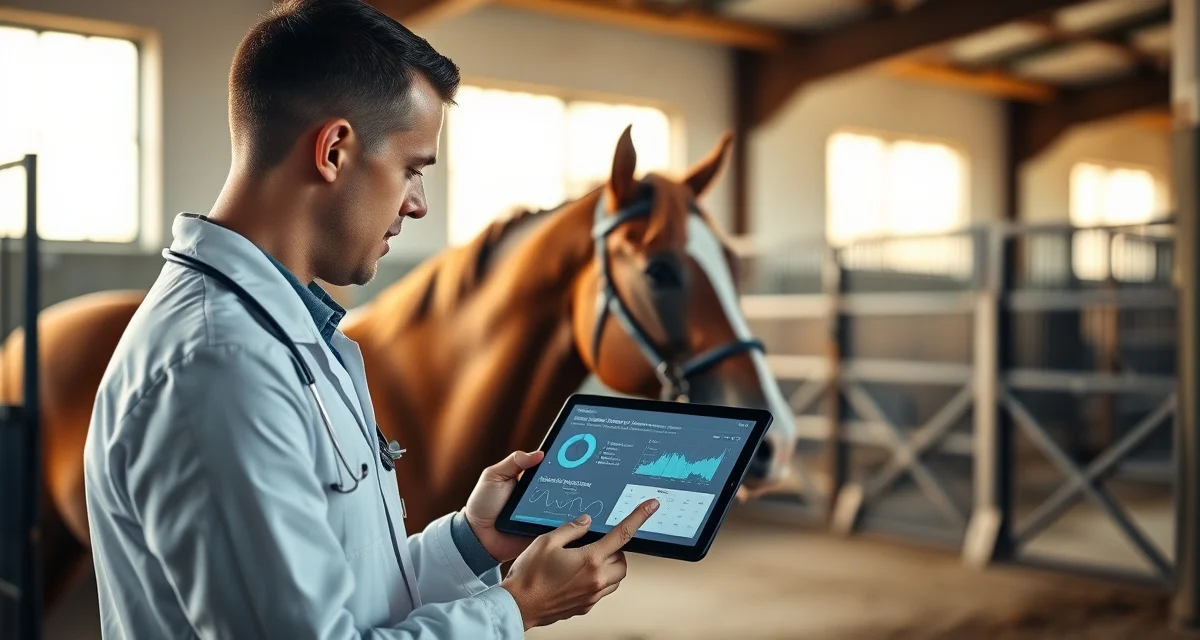
Horse Health Monitoring at Training Barns: AI Detection Guide
Training facilities represent a distinct segment with unique management needs that general barn software rarely addresses. You're not just housing horses -- you're conditioning athletes on tight schedules, reporting to owners who expect performance data, and managing a rotating roster of horses at different fitness levels. When a horse goes off, the cost isn't just a vet bill. It's missed training days, delayed competition entries, and difficult conversations with clients.
TL;DR
- Effective barn management requires systems that match actual daily workflows, not adapted generic tools
- Per-horse record keeping with digital access reduces the response time to owner questions from hours to seconds
- Automated owner communication and health alerts reduce inbound calls while increasing owner satisfaction and retention
- Billing errors cost barns thousands of dollars annually; point-of-service charge logging is the most effective prevention
- Staff accountability systems with named task assignments and completion logs prevent care gaps without micromanagement
- Purpose-built equine software connects health records, billing, and owner communication in one place
AI-powered horse health monitoring at a training barn works differently than at a boarding facility. Here's how to set it up correctly and get results that actually matter to your operation.
Why Training Barns Need a Different Monitoring Approach
A boarding barn tracks horses that mostly stand in stalls. A training barn tracks horses under physical stress -- horses whose baselines shift as fitness improves, whose heart rate and movement patterns change week to week, and whose health deviations can look like normal post-workout fatigue if you're not measuring carefully.
Standard monitoring tools flag anomalies against static baselines. That works poorly in a training environment where a horse's resting heart rate might drop 8-10 beats per minute over six weeks of conditioning. Without adaptive baseline learning, you'll either miss real problems or drown in false alerts.
BarnBeacon's training barn operations guide covers the full operational picture, but this guide focuses specifically on the health monitoring workflow.
Step 1: Set Up Individual Horse Profiles with Training Context
Capture the Right Baseline Data
Before any AI detection is useful, each horse needs a profile that reflects its current training phase. This means recording:
- Resting heart rate and respiratory rate at the start of each training block
- Normal post-workout recovery times
- Known sensitivities (gastric, respiratory, musculoskeletal history)
- Current workload level (light, moderate, intense, competition prep)
Don't pull a single baseline reading and call it done. Collect data across at least five to seven days before the system starts generating alerts. A horse two weeks into a conditioning program has a different normal than the same horse at peak fitness.
Tag Horses by Training Phase
Most monitoring platforms let you assign categories. Use them. A horse in early conditioning should have wider alert thresholds than a horse in competition prep. Grouping by phase lets you tune sensitivity without manually adjusting every individual profile.
Step 2: Configure Alert Triggers for a Training Environment
Distinguish Workout Fatigue from Health Deviation
This is where most generic systems fail. After a hard gallop, elevated heart rate, increased respiration, and reduced movement are expected. Your alert logic needs to account for scheduled workout windows so it doesn't fire every time a horse comes off the track hot.
Set your monitoring system to:
- Suppress movement-based alerts during and immediately after logged training sessions (typically a 90-minute post-workout window)
- Trigger alerts based on recovery curves, not peak values -- a horse that hasn't returned to near-resting heart rate 45 minutes post-workout is a concern
- Flag deviations in overnight resting data, which is your cleanest signal
Set Thresholds by Individual, Not Herd Average
A Thoroughbred in race training and a warmblood in dressage prep don't share the same normal. Applying herd-wide thresholds in a mixed training barn produces noise. Configure individual alert bands based on each horse's personal baseline data.
Step 3: Integrate with Vet Records and Treatment Logs
Connect Health Events to Monitoring Data
When a vet visit happens, that data needs to enter the system the same day. A horse treated for a mild colic on Tuesday should have that event logged so the system can watch for recurrence patterns over the following two weeks. Without this connection, your monitoring data and your medical records exist in separate silos that don't inform each other.
Good equine health tracking at a training facility means every treatment, medication, and vet note is timestamped and tied to the horse's monitoring timeline. This lets you spot patterns -- the horse that shows subtle movement changes 48 hours before every gastric episode, for example.
Maintain a Medication and Withdrawal Log
Training barns operating under competition rules need clean medication tracking. Your monitoring system should support logging administration dates, dosages, and calculated withdrawal windows. This isn't just compliance -- it's protection when an owner asks why their horse wasn't entered at a show.
Step 4: Build Owner Notification Protocols
Decide What Owners Actually Need to See
Owners at training barns want information, but they don't need to receive every system alert. A raw feed of sensor data creates anxiety without context. Build a tiered notification structure:
- Routine updates: Weekly summary reports showing training progress, weight trends, and health status. Automated, low-friction.
- Moderate alerts: Flagged deviations that staff are monitoring but that don't require immediate action. Notify within 24 hours with a brief note from the trainer.
- Urgent alerts: Anything requiring vet involvement. Notify immediately with a direct call, not just an app notification.
Document Every Owner Communication
When a horse has a health event, the first question from an owner is often "when did you notice this?" Your monitoring system should timestamp every alert and every staff response. This protects you and demonstrates professional management. Barn management software that integrates health monitoring with owner communication logs makes this documentation automatic rather than manual.
Step 5: Review and Refine Monthly
Audit Your Alert Accuracy
Once a month, pull your alert history and categorize each one: true positive (real health issue), false positive (normal variation flagged incorrectly), or missed event (health issue that wasn't flagged). You're aiming for a false positive rate below 20% and zero missed critical events.
If false positives are high, your thresholds are too tight or your training phase tags aren't current. If you're seeing missed events, your baselines need recalibration or your sensor placement needs review.
Update Baselines at Phase Transitions
Every time a horse moves from one training phase to the next -- say, from conditioning into competition prep -- reset the baseline collection period. Treat it like onboarding a new horse. The data from the previous phase is valuable history, but it shouldn't anchor the alert thresholds for the new phase.
Common Mistakes to Avoid
Using a single static baseline for the whole training season. Horses change. Your baselines need to change with them.
Ignoring post-workout recovery curves. Peak values during exercise are less informative than how quickly a horse returns to normal. Build your monitoring logic around recovery, not peaks.
Separating vet records from monitoring data. Health events and sensor data belong in the same timeline. If they live in different systems, you're working with half the picture.
Sending owners raw alerts without context. An unfiltered alert at 2am creates a panicked phone call, not a productive conversation. Filter, contextualize, and communicate on a schedule that matches the severity.
Skipping the monthly audit. Monitoring systems drift. Horses change. Without regular review, you'll be running on outdated parameters without realizing it.
What are the unique management needs of a training barn?
Training barns manage horses as performance athletes, not just boarded animals. This means tracking fitness progression, coordinating with trainers and owners on performance goals, managing competition schedules, and monitoring health against shifting baselines as horses condition. Billing structures also differ -- training fees, day rates, and performance bonuses require more granular tracking than standard board.
How do I run a training facility efficiently?
Efficiency at a training facility comes from standardized workflows: consistent morning check protocols, automated owner reporting, integrated vet and farrier scheduling, and health monitoring that reduces the time staff spend manually checking horses. Software that connects training logs, health data, and billing in one place eliminates the double-entry and communication gaps that slow operations down.
What software do training barn managers use?
Training barn managers use a mix of general barn management platforms and specialized equine software. The most effective setups combine health monitoring with owner communication tools, billing, and training log features. Platforms built specifically for training facility workflows -- rather than adapted from boarding barn tools -- handle the nuances of training phases, performance tracking, and multi-owner billing more accurately.
How does BarnBeacon compare to spreadsheets for barn management?
Spreadsheets require manual updates, lack real-time notifications, and create version control problems when multiple staff members are working from different files. BarnBeacon centralizes records, pushes alerts automatically based on logged events, and connects care records to billing and owner communication in one system. Most facilities report saving several hours per week after switching from spreadsheets.
What is the setup process like for BarnBeacon?
Most facilities complete the initial setup in under a week. Horse profiles, service templates, and billing configurations can be imported from existing records or entered directly. BarnBeacon's US-based support team is available to assist with setup, and most managers are running their first billing cycle through the platform within days of starting.
Can BarnBeacon support a barn with multiple staff members?
Yes. BarnBeacon supports multiple user accounts with role-based access, so barn managers, barn staff, and owners each see the information relevant to their role. Task assignments, completion logs, and communication history are all attached to the barn's account rather than to individual staff phones or email addresses.
Sources
- American Association of Equine Practitioners (AAEP)
- United States Equestrian Federation (USEF)
- American Horse Council
- Kentucky Equine Research
- UC Davis Center for Equine Health
Get Started with BarnBeacon
Running a training barn well requires the right tools behind the right protocols. BarnBeacon gives managers the health record tracking, billing automation, and owner communication infrastructure to operate efficiently without adding administrative staff. Start a free trial and see how the platform fits the way your barn already works.