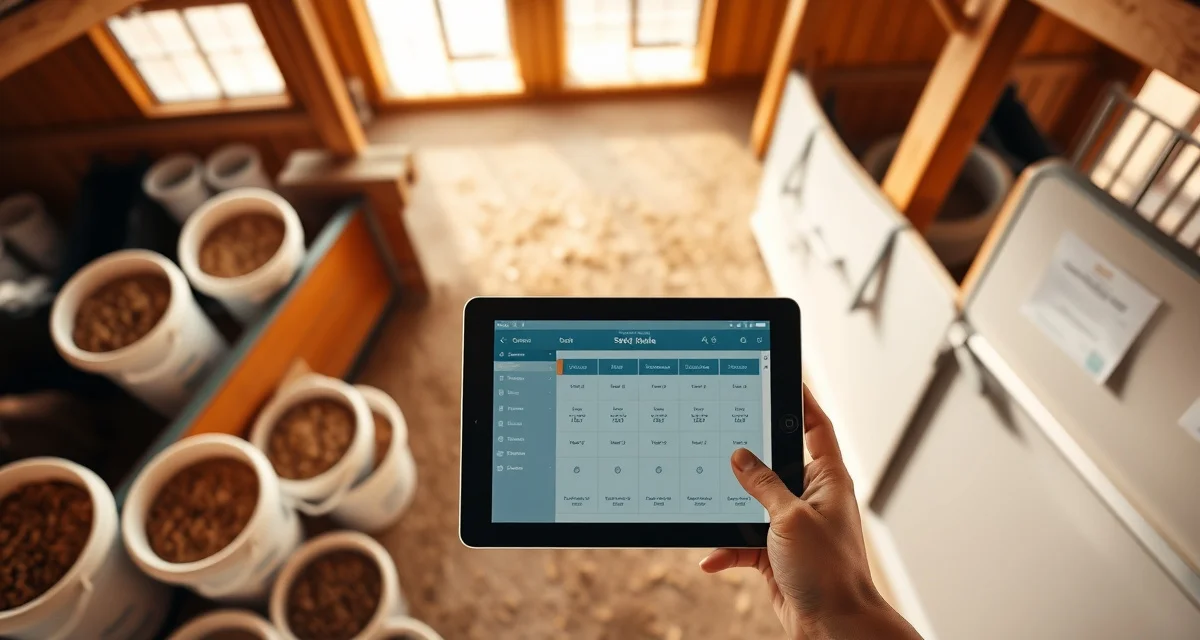
Boarding Barn Feeding Schedule Software: Top Tools Compared
Feed errors are the #2 cause of preventable colic according to AAEP 2023 data. If your barn runs feeding instructions through a whiteboard, a group text, or a spreadsheet, you're one miscommunication away from a serious incident. This barn feeding schedule software comparison breaks down three leading tools so you can choose the right one for your operation.
TL;DR
- Feed errors are the #2 cause of preventable colic per AAEP 2023 data, making accurate feeding software a safety issue, not just a convenience.
- BarnBeacon is the only tool in this comparison with real-time feed card updates, staff acknowledgment tracking, and a full audit log for every diet change.
- BarnManager covers health records and basic feeding notes but has no push alerts to staff and no mobile-optimized feed card view for feeding rounds.
- Stable Secretary has no per-horse feed cards or mobile feeding interface, making it unsuitable for barns with staff-managed feeding.
- A 30-horse barn running three daily feedings generates roughly 90 feeding events per day, at that scale, only software with real-time update propagation keeps all staff synchronized.
- A single emergency colic call starts at $500 and can exceed $10,000 for surgical cases, meaning software that prevents one feed error per year pays for itself.
- The owner-requested feed change workflow is one of the most common sources of feeding errors; only BarnBeacon supports the full five-step approval and push-notification process described in this article.
TL;DR Verdict
| Tool | Best For | Real-Time Updates | Mobile Feed Cards | Medication Integration | Price Range |
|---|---|---|---|---|---|
| BarnBeacon | Multi-staff boarding barns | Yes | Yes, per-horse | Yes | $$ |
| BarnManager | Smaller operations, record-keeping | No (manual) | Limited | Basic | $$ |
| Stable Secretary | Administrative-heavy barns | Partial | No | No | $ |
Bottom line: BarnBeacon is the strongest choice for barns where multiple staff members handle feeding across shifts. BarnManager works for smaller operations that prioritize record-keeping over real-time coordination. Stable Secretary suits barns that need billing and admin tools more than feeding precision.
Comparison Table: Feature-by-Feature
| Feature | BarnBeacon | BarnManager | Stable Secretary |
|---|---|---|---|
| Per-horse feed cards | Yes | Yes | No |
| Real-time feed updates | Yes | No | No |
| Staff mobile access | Yes | Limited | No |
| Feed change alerts | Yes | No | No |
| Owner portal for diet requests | Yes | No | No |
| Medication + feed integration | Yes | Basic | No |
| Audit log for feed changes | Yes | No | No |
| Bulk schedule editing | Yes | Manual | No |
BarnBeacon
BarnBeacon was built specifically around the problem of multi-staff feeding coordination. Its core feature is the individual feed card: a mobile-visible profile for each horse that shows exactly what to feed, how much, and when. Every staff member on shift sees the same current information.
What Makes It Different
The real-time update engine is the key differentiator. When a vet calls in a diet change at 2pm, the barn manager updates the feed card once, and every staff member's phone reflects it immediately. No reprinting, no whiteboard corrections, no hoping someone read the group chat.
BarnBeacon also connects feeding schedules directly to medication records, so a horse on a bute protocol or a restricted diet shows that context right on the feed card. This matters when you have 30+ horses and rotating staff who may not know each animal's history.
Feed change alerts are another standout. If a scheduled update hasn't been acknowledged by feeding time, the system flags it. Spreadsheets have no equivalent function, and most competing tools require someone to manually check whether changes were applied.
Who Should Use BarnBeacon
Boarding barns with more than 15 horses and more than two staff members handling feeding. Competition barns where horses have complex, frequently changing diets. Any operation where a feeding error could result in a liability claim.
Limitations
BarnBeacon is priced for professional operations. Hobby farms or single-owner private barns may find the feature set more than they need.
BarnManager
BarnManager is a well-established barn management platform with a broad feature set covering health records, farrier scheduling, billing, and feeding. It's a solid all-in-one tool, but feeding coordination is not its strongest area.
What It Does Well
BarnManager's health record system is thorough. Feeding notes can be attached to a horse's profile, and the platform is easy to navigate for barn owners who want a single place to track everything. For smaller barns where one person manages feeding and records, it covers the basics.
Where It Falls Short
The feeding module requires manual updates. When a diet changes, someone has to go into the system, find the horse's profile, and edit the record. There are no push alerts to staff, no acknowledgment tracking, and no real-time sync to a mobile feed card. In a busy barn, that's a workflow gap.
BarnManager also lacks a dedicated feed card view optimized for staff use during feeding rounds. Staff typically need to access the full horse profile to find feeding details, which adds friction during time-sensitive morning and evening feeds.
For barns that need tighter feeding control, BarnManager works better as a record-keeping companion than a feeding coordination tool.
Who Should Use BarnManager
Smaller boarding operations (under 15 horses) where one or two people handle all barn tasks. Barns that prioritize health record depth over real-time feeding coordination.
Stable Secretary
Stable Secretary is primarily an administrative and billing platform. It handles invoicing, board tracking, and basic horse records. Feeding management is minimal.
What It Does Well
If your barn's biggest pain point is billing and owner communication around board payments, Stable Secretary handles that cleanly. It's the most affordable option in this comparison and has a low learning curve.
Where It Falls Short
There are no per-horse feed cards, no mobile feeding interface, and no alert system for feed changes. Feeding information, if tracked at all, lives in general notes fields. For a barn with complex dietary needs or multiple staff, this is a significant limitation.
Stable Secretary also has no integration between feeding and medication tracking, which creates a real risk when horses are on supplements or restricted diets that affect what they can eat.
Who Should Use Stable Secretary
Private barns or very small boarding operations where the owner handles all feeding personally and needs help primarily with billing and owner invoicing.
Managing Feeding Schedules for 30+ Horses
At scale, the core problem isn't creating feeding schedules. It's keeping them accurate across multiple staff members and multiple daily feedings. A 30-horse barn with morning, midday, and evening feeds means roughly 90 feeding events per day. One miscommunication per day is a 1.1% error rate, which sounds small until it's your client's horse colicking.
The tools that handle scale best share three characteristics: mobile-first staff access, real-time update propagation, and some form of acknowledgment or audit trail. BarnBeacon checks all three. BarnManager checks one. Stable Secretary checks none.
If you're managing feeding at scale, the software choice is less about features and more about whether the system can keep every staff member synchronized without requiring a manager to manually relay every change. For barns evaluating their overall barn management software options, feeding coordination should be weighted heavily in that decision.
How to Handle Owner-Requested Feed Changes
Owner-requested feed changes are one of the most common sources of feeding errors in boarding barns. An owner texts the barn manager, the barn manager forgets to update the whiteboard, and the evening staff feeds the old ration.
The right software workflow looks like this:
- Owner submits a feed change request through the owner portal or directly to the manager
- Manager reviews and approves the change in the system
- The updated feed card pushes to all staff devices immediately
- Staff acknowledge the change before the next feeding
- An audit log records who made the change and when
BarnBeacon supports this full workflow. BarnManager requires manual steps at each stage with no automated alerts. Stable Secretary has no structured workflow for this at all.
What a Horse Feed Card Should Include
A well-structured feed card eliminates guesswork at feeding time. At minimum, it should include:
- Horse name and stall number (visible at a glance)
- AM, midday, and PM rations with specific quantities and feed types
- Supplements with timing and amounts
- Dietary restrictions (no grain, limited hay, etc.)
- Active medications that affect feeding (linked to the medication record)
- Vet or owner notes relevant to feeding
- Last updated timestamp so staff know the information is current
The timestamp matters more than most barn managers realize. A feed card with no date could be six months out of date. Staff have no way to know unless the system shows it. Pairing a well-structured feed card with a clear staff shift handoff process further reduces the risk of information falling through the cracks between feeding rounds.
Pricing Overview
Exact pricing changes frequently, so contact vendors directly for current quotes. As a general guide:
- BarnBeacon: Monthly subscription, priced per barn or per horse tier. Best value for barns over 20 horses.
- BarnManager: Monthly subscription with tiered plans. Competitive for small to mid-size barns.
- Stable Secretary: Lower monthly cost, reflects the narrower feature set.
Factor in the cost of a single colic incident when evaluating price. Emergency vet calls start at $500 and can exceed $10,000 for surgical cases. Software that prevents one feed error per year pays for itself.
Who Should Use Each Tool
Choose BarnBeacon if:
- You have multiple staff handling feeding across shifts
- Horses have complex or frequently changing diets
- You need real-time coordination and audit trails
- You want feeding and medication data in one place
Choose BarnManager if:
- You run a smaller barn and need a broad all-in-one record system
- Feeding coordination is simple and handled by one person
- Health record depth matters more than feeding-specific features
Choose Stable Secretary if:
- Billing and admin are your primary pain points
- You personally handle all feeding with no staff
- You need the lowest-cost option and feeding software is secondary
How do I manage feeding schedules for 30+ horses?
The only reliable method at that scale is software with real-time mobile access for all staff. A centralized system where feed cards update instantly and staff can acknowledge changes before each feeding eliminates the relay errors that cause most feeding incidents. Spreadsheets and whiteboards break down above 15 horses because they depend on someone manually communicating every change.
What should a horse feed card include?
A complete feed card should show the horse's name and stall, AM/midday/PM rations with exact quantities, all supplements with timing, active dietary restrictions, any medications that affect feeding, and a last-updated timestamp. The timestamp is often overlooked but critical: staff need to know whether the information they're reading reflects today's instructions or last month's.
How do I handle owner-requested feed changes across a whole barn?
The safest workflow routes all owner requests through a single approval step, then pushes the approved change to all staff devices automatically. Without that push notification, changes depend on someone remembering to tell the right people before the next feeding. BarnBeacon's owner portal and real-time feed card updates handle this end-to-end. In tools without that feature, create a written protocol requiring managers to update the system and verbally confirm with feeding staff for every diet change.
Can feeding software help reduce liability if a horse gets sick after a feeding error?
Yes, in a meaningful way. An audit log that records who updated a feed card, when the change was made, and which staff member acknowledged it before feeding creates a documented chain of custody for every diet instruction. That record can demonstrate due diligence if a boarding client disputes how their horse was fed. BarnBeacon's audit log provides this; BarnManager and Stable Secretary do not.
Is barn feeding software worth the cost for a barn with fewer than 15 horses?
It depends on staffing, not just horse count. A 10-horse barn where two or three different people handle feeding across morning and evening shifts still faces the same relay-error risk as a larger operation. If one person manages all feeding personally and the diet rarely changes, a simpler tool or even a well-maintained spreadsheet may be sufficient. Once you add a second staff member to the feeding rotation, the case for dedicated software with real-time updates becomes much stronger.
How does feeding software handle horses with medical diets or post-surgery restrictions?
The best tools, including BarnBeacon, link the feed card directly to the horse's medication and health record so that a restricted diet or post-surgical feeding protocol appears as a visible flag at feeding time. This matters most for rotating staff who may not know a horse's history. Without that integration, a new staff member has no way to know a horse is on a low-starch diet unless someone tells them verbally or leaves a note, both of which are easy to miss.
Sources
- American Association of Equine Practitioners (AAEP), Colic Prevention and Nutrition Guidelines
- University of Minnesota Extension, Horse Nutrition and Feeding Management Program
- Equine Veterinary Journal, peer-reviewed research on feed-related colic incidence and prevention
- The Horse magazine (published by Equine Network), barn management and feeding best practices coverage
- Colorado State University Equine Sciences Program, equine digestive health and feeding frequency research
Get Started with BarnBeacon
If your barn runs more than 15 horses or has more than one person handling feeding, BarnBeacon gives you the real-time feed cards, staff acknowledgment tracking, and audit logs covered throughout this comparison, the specific features that close the gap between a diet change and the staff member actually acting on it. You can start a free trial to see how the feed card and alert system work with your actual horse roster before committing to a plan.