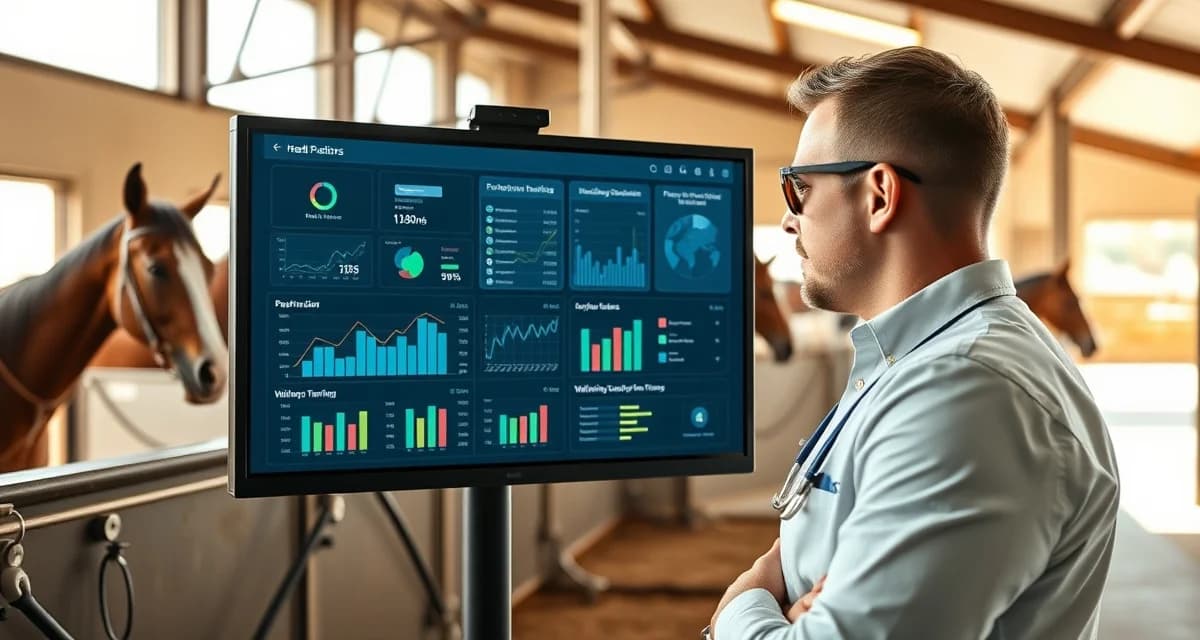
Team Roping Barn Health Monitoring: FAQ for Managers
Team roping barn health monitoring sits in a category of its own. Unlike boarding facilities or trail riding operations, team roping barns cycle horses through high-intensity work patterns, shared equipment, and frequent hauling schedules that generic barn software was never designed to track.
TL;DR
- Team roping facilities have distinct health monitoring requirements driven by partner-based billing, cattle handling, and timed event scheduling.
- Split billing between roping partners for shared arena and cattle charges is a common source of administrative complexity.
- Cattle inventory and rotation tracking is a barn management requirement unique to team roping and working cow horse operations.
- Owner communication at team roping facilities should include horse performance notes tied to specific practice sessions.
- Purpose-built barn software handles partner split billing and cattle-related charges without manual workaround steps.
Most barn management platforms treat all equine facilities the same. They don't. A team roping operation running 30 to 60 horses through regular practice sessions, jackpots, and weekend ropings has health monitoring demands that require purpose-built tools, not a repurposed boarding ledger.
Why Team Roping Facilities Have Unique Health Monitoring Needs
The workload profile at a team roping barn creates specific health risks. Horses rotate between header and heeler roles, absorb repetitive stress on specific muscle groups, and often share water sources and equipment with horses hauled in from outside facilities.
That combination of internal herd management and constant outside exposure is where health problems start. A respiratory issue introduced by a visiting horse at a Saturday jackpot can move through a 40-horse barn within 72 hours if no one is tracking symptom onset by horse, date, and contact event.
Generic software logs vet visits. It doesn't connect the dots between an outside horse's arrival and the first cough three days later. That gap is exactly what barn management software built for competitive equine operations is designed to close.
How do team roping barn managers handle health monitoring?
Most team roping barn managers rely on a combination of daily visual checks, handwritten logs, and periodic vet calls. The problem is that handwritten systems don't scale past about 15 horses before things get missed.
At larger operations, managers typically assign grooms or barn staff to flag any changes in appetite, gait, or behavior during morning and evening feeding. But without a centralized system, those observations live in someone's head or on a clipboard that gets lost.
The most effective approach is a structured daily check-in protocol logged digitally by horse, with fields specific to performance horses: hydration status, muscle soreness indicators, hoof temperature, and any behavioral changes post-workout. BarnBeacon's health monitoring module was built around exactly this workflow, giving team roping barn managers a consistent record for every horse after every session.
What software do team roping barns use for health monitoring?
Most team roping barns that use software at all are using general-purpose tools built for boarding or breeding operations. Those platforms handle billing and stall assignments well. They handle performance horse health monitoring poorly.
The specific gaps show up fast: no way to log post-competition soreness patterns, no contact tracing when an outside horse visits, no alerts tied to workload thresholds. A horse that worked hard three days in a row and is now off feed needs a different kind of flag than a retired pasture horse with the same symptom.
BarnBeacon addresses this directly with team roping-specific health monitoring features, including workload-linked health alerts, visitor horse intake logs, and symptom tracking that connects to event history. For a deeper look at how these tools fit into daily operations, see team roping barn operations.
What are the health monitoring challenges at team roping facilities?
Team roping facilities face four health monitoring challenges that most barn software ignores entirely.
1. High horse turnover and visitor exposure. Jackpots and practice days bring outside horses onto the property regularly. Without a formal intake and monitoring process, biosecurity gaps are invisible until a problem is already spreading.
2. Repetitive stress injuries that develop gradually. Team roping horses absorb significant stress in the shoulders, hocks, and lower back. These injuries don't appear overnight. They show up as subtle gait changes or reluctance to work that only becomes obvious after weeks of untracked data.
3. Multiple horses under multiple riders. In a team roping barn, a single horse may work with several different ropers in a week. Each rider notices different things. Without a shared logging system, those observations never combine into a useful health picture.
4. Hauling and competition schedules that disrupt baselines. A horse that hauls four hours to a roping and back has a different physiological baseline for the next 48 hours. Health monitoring that doesn't account for travel history will generate false flags or, worse, miss real ones.
These are not problems that generic equine software was designed to solve. They require a platform that understands the specific rhythms of a competitive team roping operation.
How do team roping facilities handle billing when a horse and rider participate in events with multiple partners?
Partner billing at team roping facilities requires the ability to assign a single session or event cost to two or more client accounts. The split configuration should be documented at the time the arrangement is made, not reconstructed at month end. When a horse works with different partners across different events, each session record should specify the cost split in use for that event. Purpose-built barn software handles these variable split configurations automatically; general billing tools require manual entry for each instance.
What health monitoring practices are most important for working cattle horses?
Horses that work cattle regularly are exposed to higher physical demands and more variable conditions than horses in controlled arena work. Post-work health checks focusing on limb temperature and filling, respiratory recovery rate, and any gait changes should be logged after each cattle work session. Baseline vitals established at intake give staff a reference point for assessing whether post-work findings are within normal range or warrant follow-up.
Sources
- American Association of Equine Practitioners (AAEP)
- American College of Veterinary Internal Medicine (ACVIM)
- Cornell University College of Veterinary Medicine
- University of California Davis School of Veterinary Medicine
- The Horse magazine
Get Started with BarnBeacon
Team roping facilities carry billing and scheduling complexity -- partner splits, cattle charges, timed event bookings -- that generic barn software was never designed to handle. BarnBeacon is built for equine facilities with exactly this kind of operational specificity, connecting daily care records to billing and owner communication in a single platform. If your team roping operation is managing these workflows through manual workarounds, BarnBeacon gives you tools that match how your facility actually runs.