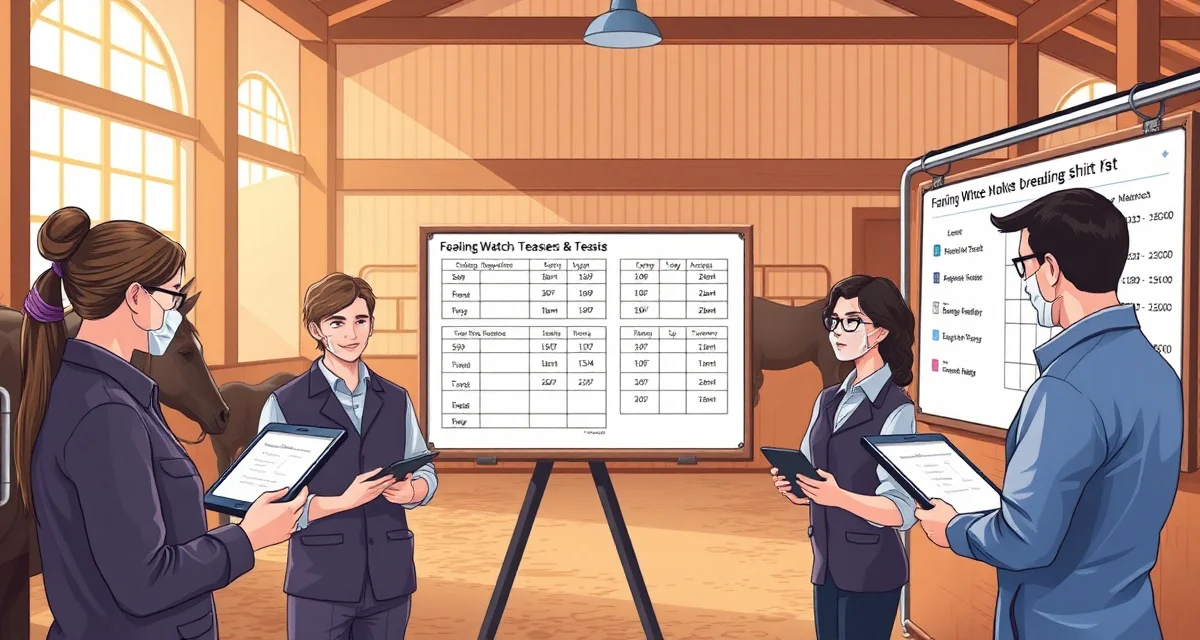
Shift Management at Breeding Barns: [staff scheduling](/staff-scheduling) and Handover
Breeding barns don't run like boarding or training facilities. The work is cyclical, high-stakes, and time-sensitive in ways that generic scheduling tools simply don't account for. Breeding facilities represent a distinct segment with unique management needs, from foaling watch rotations to teasing schedules, semen handling protocols, and veterinary coordination windows that can shift daily.
TL;DR
- The gap between morning and afternoon shifts is the most common point where critical horse care information is lost.
- Every shift handoff needs a written or digital checklist covering health flags, deferred tasks, and owner follow-ups.
- Assigning specific names (not roles) to every task creates accountability and prevents tasks from falling through the cracks.
- Breeding facilities need shift protocols tailored to their specific horse population and care intensity.
- Digital shift logs create a searchable record that paper sign-off sheets cannot provide.
Getting shift management right at a breeding barn isn't just an operational nicety. A missed handover note during foaling season or a gap in overnight coverage can cost you a live foal.
Why Standard Scheduling Falls Short at Breeding Facilities
Most staff scheduling systems are built around fixed tasks and predictable hours. Breeding barn work is neither. Mare cycles dictate the calendar. A mare showing signs of imminent foaling at 2 a.m. doesn't care that the night shift ends at 6 a.m.
The result is that many breeding barn managers fall back on whiteboards, group texts, and paper logs. These work until they don't, and when they fail, they fail at the worst possible moment.
Effective equine staff scheduling at a breeding facility requires a system that accounts for variable task loads, on-call coverage, and documentation that travels with the shift, not the person.
How to Set Up Shift Management at a Breeding Barn
Step 1: Map Your Breeding Season Workflow by Phase
Before you can schedule staff, you need to document what actually happens and when. Breeding barn operations fall into distinct phases: pre-season preparation, active breeding, foaling, post-foaling care, and off-season maintenance.
Each phase has different staffing demands. Active breeding season may require a dedicated semen handling technician on-site during specific morning hours. Foaling season requires overnight coverage with someone qualified to assist with dystocia or call the vet. Off-season is when you can run leaner.
Build a phase-by-phase task matrix. List every recurring task, its frequency, the skill level required, and the time window it must occur in. This becomes the foundation of your scheduling structure.
Step 2: Define Shift Roles, Not Just Shift Times
A common mistake is scheduling people for time blocks without specifying what they own during that block. At a breeding barn, every shift needs defined role assignments.
Typical shift roles include: foaling watch, morning barn check, breeding prep, mare handling, record entry, and facility rounds. Each role should have a written task list attached to it, not just a verbal understanding passed between staff.
When roles are explicit, accountability follows naturally. You can see at a glance whether the 4 a.m. foaling check was completed, who did it, and what they observed.
Step 3: Build a Handover Documentation Protocol
Handover is where breeding barn operations most often break down. The outgoing shift knows things the incoming shift needs to know, which mare is close to foaling, which stallion had an abnormal collection, which vet call is pending.
Create a standardized handover form that staff complete before leaving. It should cover: mare status updates, any abnormal observations, pending tasks not yet completed, medication or treatment notes, and any scheduled arrivals or departures in the next 12 hours.
This doesn't need to be a lengthy document. A structured one-page form, completed consistently, is worth more than a detailed report that nobody fills out. Digital handover logs that timestamp entries and require sign-off from the incoming shift leader add an extra layer of accountability.
Step 4: Set Up On-Call Coverage for Foaling Season
Foaling season requires a coverage model that goes beyond standard shift scheduling. You need a clear on-call rotation that staff understand and agree to before the season starts.
Define what triggers an on-call callout: a mare in active labor, a foal not nursing within two hours of birth, a mare showing colic signs post-foaling. The clearer the trigger criteria, the fewer judgment calls staff have to make at 3 a.m.
Publish the on-call rotation at least two weeks in advance. Include a backup contact for every night in case the primary on-call person is unreachable. Document this in the same system you use for regular scheduling so there's one source of truth.
Step 5: Assign Task Ownership and Track Completion
Scheduling who is present is only half the job. You also need to track whether critical tasks were completed during each shift.
Use a task checklist system tied to each shift role. For breeding barn operations, this means daily tasks like: checking water and feed, recording mare observations, logging breeding activity, administering scheduled medications, and completing end-of-shift documentation.
Barn management software built for equine facilities can automate task assignment based on shift role and flag incomplete items before the shift closes out. This removes the reliance on memory and verbal confirmation.
Step 6: Review and Adjust Scheduling Weekly During Peak Season
Breeding season is not static. A mare that was two weeks out from her expected foaling date can move up. A stallion health issue can change the breeding schedule overnight. Staff illness during peak season hits harder than at any other time of year.
Set a weekly scheduling review during active breeding and foaling seasons. Review the upcoming seven days, confirm coverage for every overnight shift, and identify any gaps before they become emergencies.
Keep a short list of qualified relief staff you can call on short notice. Even one or two reliable part-time workers who know your facility can be the difference between a covered shift and a crisis.
Common Mistakes in Breeding Barn Shift Management
Relying on verbal handovers. Information passed verbally between tired staff at shift change gets lost, misremembered, or skipped entirely. Written documentation is non-negotiable.
Scheduling by availability instead of by skill. Not every staff member is qualified to handle a foaling emergency or assist with a breeding procedure. Your schedule needs to reflect who can do what, not just who is available.
Treating foaling watch as a passive task. Foaling watch requires active monitoring at defined intervals. If your schedule just says "overnight coverage" without specifying check intervals and documentation requirements, you don't have a foaling watch protocol.
Failing to document near-misses. When something almost goes wrong, that's information. Build a simple incident log into your shift documentation so patterns surface before they become serious problems.
What are the unique management needs of a breeding barn?
Breeding barns require scheduling systems that account for cyclical, season-driven workloads rather than fixed daily routines. Staff need clear role assignments tied to breeding and foaling phases, structured handover documentation, and on-call protocols for overnight foaling coverage. Record-keeping requirements are also more intensive, with breeding records, veterinary logs, and foal registration documentation all needing consistent maintenance.
How do I run a breeding facility efficiently?
Efficiency at a breeding facility starts with phase-based planning. Map your staffing needs to each stage of the breeding calendar, define task ownership for every shift role, and use a digital system to track task completion and handover notes. Weekly scheduling reviews during peak season prevent coverage gaps before they occur. Standardized protocols for common procedures reduce the time staff spend making judgment calls and increase consistency across shifts.
What software do breeding barn managers use?
Breeding barn managers increasingly use equine-specific barn management software that can handle task assignment, shift scheduling, and record-keeping in one place. Generic scheduling tools lack the ability to tie tasks to breeding-specific workflows or track foaling observations alongside staff schedules. BarnBeacon is built to adapt to breeding facility workflows and billing structures, making it a practical fit for operations that need more than a basic calendar.
What should a shift handoff checklist include at a breeding facility?
A shift handoff checklist at a breeding facility should cover any horses showing health concerns since the last check, tasks that were deferred and why, supply or equipment issues needing follow-up, and any owner communications that need a response before the next shift ends. The handoff document should take no more than five minutes to complete and should be a digital record, not a verbal summary, so the receiving shift has a reference they can return to during their work.
How do I ensure staff actually complete shift handoffs consistently?
Make the handoff completion a required step before a shift can be logged as finished in your barn management system. When handoff checklists are optional, they become the first thing dropped under time pressure. Building the handoff into the shift-close workflow creates the habit without requiring management enforcement of each individual shift.
Sources
- American Association of Equine Practitioners (AAEP)
- American Horse Council
- United States Equestrian Federation (USEF)
- University of Minnesota Extension Equine Program
- The Horse magazine
Get Started with BarnBeacon
Shift management at a breeding facility depends on every crew working from the same current information -- not from what the previous shift remembered to mention. BarnBeacon's digital handoff tools ensure that health flags, deferred tasks, and owner follow-ups are visible to each incoming shift without relying on verbal relay. If your breeding barn is still losing critical information between shifts, BarnBeacon gives your teams the structure to close that gap.