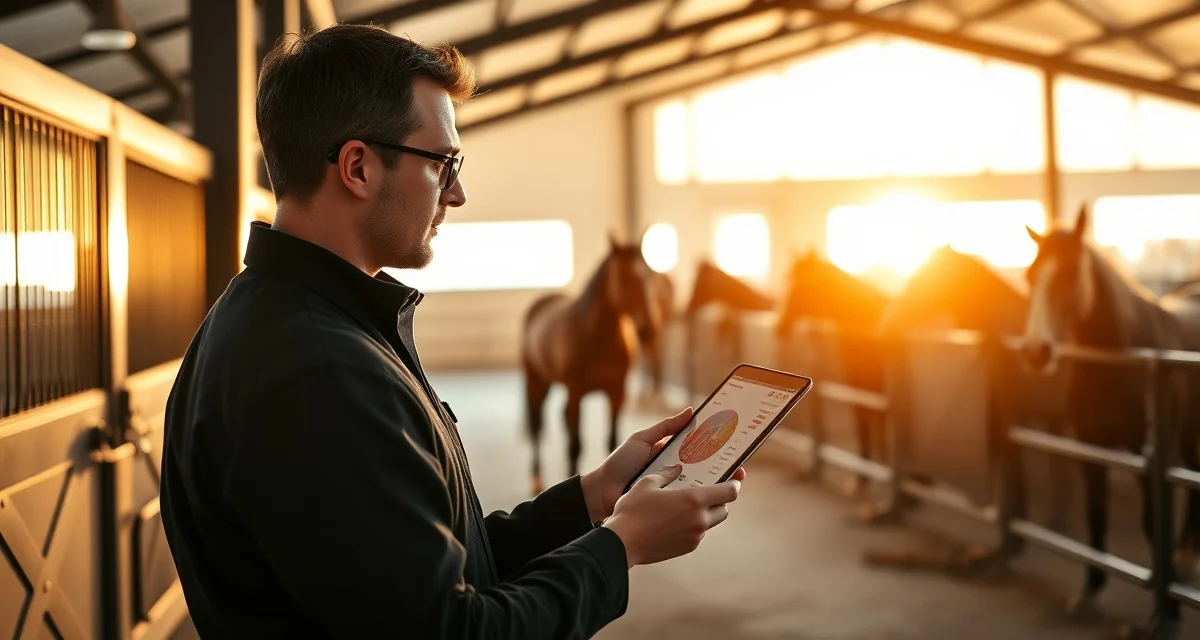
Eventing Barn Health Monitoring: Complete Guide for Facility Managers
Eventing horses have 3x higher vet call rates than other disciplines. That's not a flaw in the sport: it reflects the physical demands of a three-phase competition and the culture of proactive health management that eventing trainers adopt to keep horses competing long and sound. If you're running an eventing facility and your vet call rate feels high, it may actually be appropriate for your horse population.
TL;DR
- Early detection of health changes in horses requires consistent daily observation and documented baselines.
- Digital health logs create a timestamped record that makes pattern changes visible across days or weeks.
- Feed intake, water consumption, and behavioral changes are early indicators that warrant closer attention.
- Medication tracking with dose logging and missed-dose alerts reduces administration errors at multi-horse facilities.
- Health records accessible from a phone are essential when horses travel to events or require emergency care off-property.
- BarnBeacon flags deviations from each horse's individual baseline before they become more serious problems.
The challenge isn't reducing vet calls. It's making sure every vet interaction is documented well, that health trends are visible before they become emergencies, and that the information generated by that higher monitoring activity actually flows to the right people.
The Physical Profile of Eventing Horses
Cross-country is the defining physical challenge of eventing. Horses gallop at speed for 10 to 15 minutes (at the lower levels) to over 30 minutes (at the upper levels), jumping solid fences while managing terrain changes, water complexes, and combination challenges. That workload creates specific physical risks:
Lower limb stress. The galloping and jumping on often-uneven terrain loads tendons, ligaments, and joints. Suspensory and superficial digital flexor tendon injuries are among the most common career-limiting issues in eventing horses. Systematic post-gallop and post-cross-country leg checks catch early changes before they become serious injuries.
Impact injuries. Cross-country involves contact with solid fences. Overreach wounds, brush injuries, and minor impact trauma from fence strikes are common. These need to be assessed and treated promptly and logged in the horse's health record.
Cardiovascular fitness markers. Cross-country fitness is measurable. Heart rate recovery after a conditioning gallop is a quantifiable fitness marker. Tracking recovery data over time tells you whether the conditioning program is working and whether a horse is ready for the demands of a specific event.
Post-competition fatigue. Horses that complete a cross-country course at any level are genuinely tired. The 24 to 48 hours after a competition are a high-risk window for stress colic, shipping fatigue in horses that traveled, and the surfacing of any soft tissue stress that occurred during the course.
Daily Health Monitoring at Eventing Facilities
Daily monitoring at an eventing barn needs to be more systematic than at a casual boarding operation. The higher-risk nature of the horses' work requires closer attention.
Morning protocol for eventing horses:
- Visual check: attitude, comfort, posture
- Water consumption overnight
- Manure production and quality
- Appetite
- All four lower limbs: heat and filling before exercise
- For horses that competed within the past 72 hours: extra attention to legs, hydration, and gut sounds
Post-exercise protocol:
- Cooling out completely before any final leg assessment
- Post-work leg check: compare to pre-exercise for new heat or filling
- For any horse that did cross-country work (schooling or competition): thorough assessment of all four limbs plus visual check for any new cuts or impact marks
Signs that warrant immediate vet contact:
- Any lameness observable at walk or trot
- Heat or significant filling in a limb that's new since the previous check
- Signs of colic: pawing, flank watching, getting up and down
- Respiratory distress
- Significant cuts or wounds from cross-country contact
- Unusual fatigue or depression following competition or hard schooling
Veterinary Coordination at Eventing Facilities
Managing a higher-volume veterinary relationship requires organization. When multiple horses are receiving maintenance care and multiple vet calls happen per month, keeping records clean is a full-time administrative responsibility.
Maintenance protocol tracking. Horses receiving regular joint injections, shock wave treatments, or other maintenance procedures need treatment records that show what was done, when, and what the return-to-work protocol is. This is particularly important for horses competing at events with drug testing.
Pre-competition veterinary checks. Many eventing trainers conduct a pre-event vet check as standard practice, especially before upper level events. These should be scheduled far enough in advance to allow treatment if something is found. A vet check the day before hauling out is too late to do much if there's a problem.
Post-competition assessments. A veterinary check after a significant event, particularly after cross-country, is standard practice at well-run eventing facilities. Log the findings and any recommendations.
Fitness Monitoring
Cross-country fitness is a critical health marker for eventing horses. A horse that isn't fit enough for its competition level is at significantly higher risk on the cross-country course.
Tracking fitness progression through the conditioning program, with specific data points (heart rate after a conditioning gallop, recovery time, trainer observations on effort level), gives you evidence that the program is working and helps you make defensible decisions about competition readiness.
Using Software for Eventing Health Monitoring
BarnBeacon's barn management software supports the health monitoring depth that eventing facilities need. Detailed veterinary records, post-competition assessment logs, and conditioning fitness notes all live in one place. Work restriction entries from vet visits automatically affect the training schedule.
The platform's health alert system lets you set monitoring flags for horses in post-competition recovery, horses with active soundness concerns, and horses approaching maintenance appointment due dates.
For a complete view of how health monitoring fits into eventing facility operations, see the eventing barn operations guide.
Frequently Asked Questions
How do eventing barn managers handle health monitoring?
Eventing facilities run more systematic daily health protocols than most disciplines, with specific post-exercise and post-competition assessment requirements. Veterinary records are more detailed and more frequent, and fitness monitoring is tracked quantitatively to inform competition readiness decisions.
What software do eventing facilities use for health monitoring?
Eventing facilities need health monitoring software that handles detailed veterinary records, connects work restrictions to the training schedule, and supports fitness progression tracking. BarnBeacon is designed for the monitoring needs of performance horse facilities with higher veterinary engagement.
What are the unique health monitoring challenges at eventing barns?
The 3x higher vet call rate creates more health record management than other disciplines. Post-cross-country assessment is a specific monitoring requirement: every horse that completes a cross-country course needs a systematic check in the hours following. Fitness monitoring for cross-country readiness is also a quantitative tracking requirement that most other disciplines don't have.
What health changes in horses are easiest to miss without a digital log?
Gradual changes in feed intake, water consumption, and body weight are the most commonly missed early health indicators because they occur slowly and are easy to normalize over time. A horse that eats slightly less each day for two weeks may not trigger concern on any single day, but the pattern across logged data makes it obvious. This is why timestamped feeding logs matter: they create a record that reveals trends that daily observation alone misses.
How often should health observations be logged for boarding horses?
At a minimum, health observations should be logged during morning and evening feeding rounds, which catches the majority of acute changes. For horses on medication protocols, active treatment, or rehabilitation, additional check-in logs during the day are appropriate. The goal is not to create data for its own sake but to establish a baseline for each horse that makes deviations detectable quickly.
What should a complete horse health records include?
A complete health record should include vaccination history with dates and products used, deworming records, Coggins test results, farrier visit notes, dental records, any medications administered with dose and duration, vet visit summaries, and any injury or illness events with outcomes. This record should be accessible from a phone for use at events or during emergency vet calls.
Sources
- American Association of Equine Practitioners (AAEP), equine health care guidelines and best practices
- American Veterinary Medical Association (AVMA), veterinary standards for equine care
- University of Kentucky Gluck Equine Research Center, equine health research publications
- Colorado State University College of Veterinary Medicine and Biomedical Sciences, equine health resources
- The Horse magazine, published by Equine Network, equine health and management reporting
Get Started with BarnBeacon
BarnBeacon's health monitoring tools build a complete, timestamped health history for every horse on your property and flag deviations from individual baselines before they become serious problems. Start a free 30-day trial to see how it works with your actual horse population.