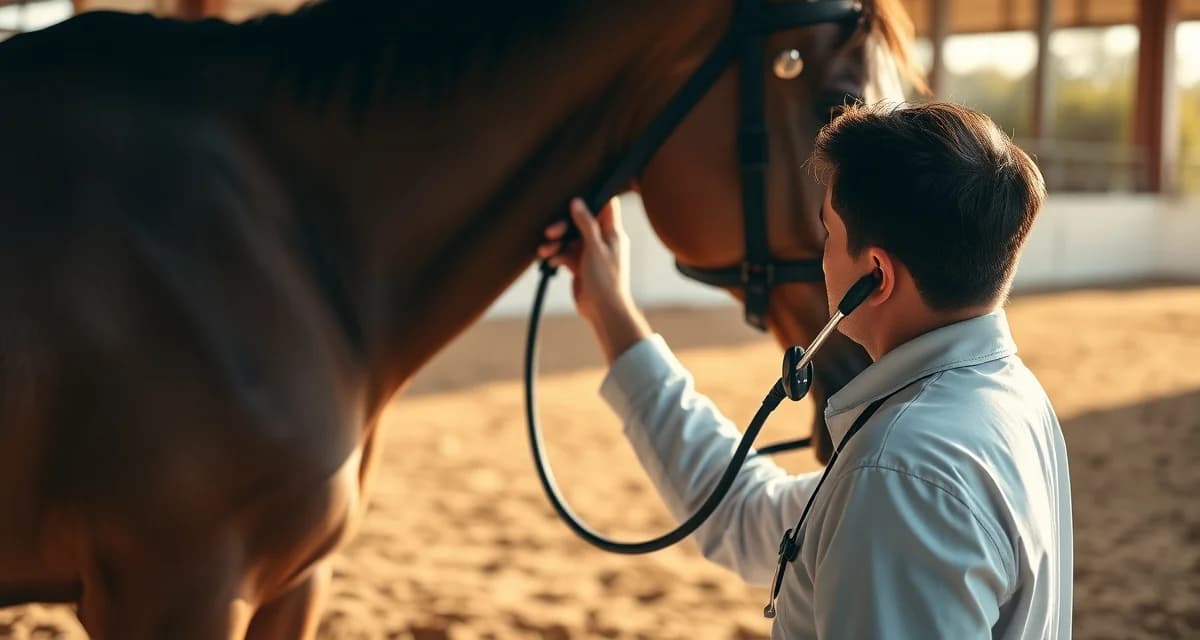
Endurance Barn Health Monitoring: Complete Guide for Facility Managers
The AERC sanctions 700+ endurance events annually across the US, and the horses competing in those events are monitored for fitness and metabolic health more rigorously than horses in almost any other discipline. At every AERC ride, horses pass through veterinary panels that check pulse, gut sounds, capillary refill, hydration, and gait. The vet check data you collect at rides is health monitoring data, and it belongs in your horse's health record alongside everything you're tracking at home.
TL;DR
- Early detection of health changes in horses requires consistent daily observation and documented baselines.
- Digital health logs create a timestamped record that makes pattern changes visible across days or weeks.
- Feed intake, water consumption, and behavioral changes are early indicators that warrant closer attention.
- Medication tracking with dose logging and missed-dose alerts reduces administration errors at multi-horse facilities.
- Health records accessible from a phone are essential when horses travel to events or require emergency care off-property.
- BarnBeacon flags deviations from each horse's individual baseline before they become more serious problems.
What Makes Endurance Health Monitoring Different
Health monitoring at endurance facilities isn't limited to illness and injury. Fitness monitoring and metabolic monitoring are equally important, and the three categories overlap in ways that affect daily management decisions.
Resting heart rate trends. A conditioned endurance horse's resting heart rate drops as fitness improves. Tracking resting heart rate weekly or biweekly over the conditioning season gives you a measurable fitness indicator. A resting heart rate that's elevated above baseline without explanation is an early health signal worth investigating.
Recovery heart rate after conditioning rides. How quickly a horse's heart rate returns to the 60-80 bpm range after a conditioning ride is one of the primary fitness metrics in endurance. Logging recovery times after each conditioning session lets you track improvement and flag sessions where recovery was slower than expected.
Weight and body condition. Endurance horses in heavy conditioning can lose weight if caloric intake doesn't keep pace with energy output. Monthly body condition scoring and more frequent weight checks during the peak conditioning period catch downward trends before they become performance or health problems.
Hydration assessment. Skin tent test, capillary refill time, and mucous membrane moisture give you basic hydration indicators that should be checked after long conditioning rides and more frequently during hot weather. Endurance horses that come home from long conditioning rides dehydrated need dietary and management adjustments, not just water.
Electrolyte intake and management. Electrolyte supplementation is standard practice in endurance conditioning. Tracking what's being given, when, and how the horse responds is part of the metabolic monitoring picture.
Veterinary Check Records as Health Data
Every AERC ride includes one or more veterinary panels. The pulse-and-gut-sounds checks that horses pass through at vet holds are the most rigorous external health assessments endurance horses receive. Capturing that data and carrying it back into the horse's health record turns ride vet checks into longitudinal health data.
What to capture at each vet check:
- Pulse on arrival and pulse after the hold
- Gut sounds grade (A/B/C rating)
- Capillary refill time
- Mucous membrane color
- Skin tent hydration test result
- Trot-out assessment (A/B/C)
- Any veterinary notes or comments
Over multiple rides, this data shows patterns: a horse that consistently presents with B gut sounds at the second vet hold may need electrolyte or feed adjustments. A horse whose trot-out scores have declined over three rides may need a lameness evaluation before the next competition.
Daily Health Monitoring in the Conditioning Barn
The daily health check at an endurance facility looks similar to other disciplines, with some endurance-specific additions.
Morning check: Temperature, pulse, respiration, feed and water consumption, manure production, any behavioral changes. Note any swelling in legs, feet, or joints.
Post-conditioning check: Recovery pulse time, hydration indicators, any muscle soreness indicators (reluctance to move, sensitivity to touch along the back or hindquarters), and any gait abnormalities.
Weekly: Body condition score, weight if available, assessment of coat and hoof quality.
Pre-ride (2 to 3 days before an AERC ride): Confirm the horse is sound at the trot, check pulse at rest, assess hydration and body condition. Any elevation in resting pulse or lameness at this stage is a reason to reconsider the entry.
Post-Ride Health Monitoring
The 48 to 72 hours after an AERC ride are an important health monitoring window. Endurance horses can show delayed signs of metabolic stress in the days following a ride.
Monitor closely for: elevated resting pulse that doesn't return to baseline within 24 hours, decreased manure production, reluctance to eat, muscle soreness or stiffness, and any swelling in the lower limbs that wasn't present at the ride finish. Any of these warrants veterinary contact.
Using Software for Endurance Health Monitoring
BarnBeacon's barn management software supports the multi-layered health monitoring that endurance facilities require. Conditioning logs, ride vet check records, resting heart rate trends, and metabolic monitoring data can be tracked in one place, giving you the longitudinal view that makes the data useful.
For a full view of endurance facility operations, see the endurance barn operations guide.
Frequently Asked Questions
How do endurance barn managers handle health monitoring?
Endurance facilities monitor fitness and metabolic health alongside standard illness and injury tracking. Resting and recovery heart rates, weight trends, hydration assessments, and veterinary panel results from each AERC ride are all part of the health monitoring picture. Post-ride monitoring in the 48 to 72 hours following an event is a specific endurance practice.
What software do endurance facilities use for health monitoring?
Endurance facilities need health monitoring software that integrates conditioning logs with health records, captures ride vet check data, and tracks metabolic indicators over time. BarnBeacon supports this integrated monitoring approach, connecting fitness data to health records for longitudinal review.
What are the unique health monitoring challenges at endurance barns?
Metabolic monitoring is the most distinctive challenge: endurance horses face metabolic demands during rides and conditioning that other disciplines don't replicate. Tracking electrolyte intake, hydration, and weight across an active conditioning season requires more systematic data capture than the standard illness-and-injury health record.
What health changes in horses are easiest to miss without a digital log?
Gradual changes in feed intake, water consumption, and body weight are the most commonly missed early health indicators because they occur slowly and are easy to normalize over time. A horse that eats slightly less each day for two weeks may not trigger concern on any single day, but the pattern across logged data makes it obvious. This is why timestamped feeding logs matter: they create a record that reveals trends that daily observation alone misses.
How often should health observations be logged for boarding horses?
At a minimum, health observations should be logged during morning and evening feeding rounds, which catches the majority of acute changes. For horses on medication protocols, active treatment, or rehabilitation, additional check-in logs during the day are appropriate. The goal is not to create data for its own sake but to establish a baseline for each horse that makes deviations detectable quickly.
What should a complete horse health records include?
A complete health record should include vaccination history with dates and products used, deworming records, Coggins test results, farrier visit notes, dental records, any medications administered with dose and duration, vet visit summaries, and any injury or illness events with outcomes. This record should be accessible from a phone for use at events or during emergency vet calls.
Sources
- American Association of Equine Practitioners (AAEP), equine health care guidelines and best practices
- American Veterinary Medical Association (AVMA), veterinary standards for equine care
- University of Kentucky Gluck Equine Research Center, equine health research publications
- Colorado State University College of Veterinary Medicine and Biomedical Sciences, equine health resources
- The Horse magazine, published by Equine Network, equine health and management reporting
Get Started with BarnBeacon
BarnBeacon's health monitoring tools build a complete, timestamped health history for every horse on your property and flag deviations from individual baselines before they become serious problems. Start a free 30-day trial to see how it works with your actual horse population.